
The Systems Integrator for the Net-Zero Transition
CRID
Centre for Research and Implementation for Decarbonization
Closing India's decarbonisation gap, sector by sector.
Why CRID Exists
Science here. Policy there. Incubation elsewhere.
Think tanks identify the right problems and hold deep domain knowledge — but lack the execution capability to translate insight into real-world deployment. Startups are strong operators with market-oriented instincts — but they overlook structurally complex problems that don't fit a venture-scale thesis. Neither alone can close India's decarbonisation gap.
CRID sits at the intersection: a systems integrator that moves from research to pilot to policy to national-scale implementation — channelling the patient capital locked inside universities into the sectors that need it most.
Our Mission
Lead the decarbonization transition through Heat Pumps by playing the role of a systems integrator.
Our Vision
India cutting its emissions by 5% by 2047, leading a 360° transition in at least 10 sectors.
Aligned with Developed India 2047 / Viksit Bharat
How CRID Works · Phased Approach
Research
● We are here0–16 months
Patient capital fuels deep research, heat mapping, and technology assessment.
Pilot
16–32 months
Strategic pilots deployed across sectors to generate real-world proof of performance.
Policy
32–48 months
Findings translated into national programs and policy frameworks for adoption at scale.
Scale
48+ months
Private capital attracted. Startups graduated from CRID ecosystem. Mass decarbonisation achieved.
Research
● We are here0–16 months
Patient capital fuels deep research, heat mapping, and technology assessment.
Pilot
● We are here16–32 months
Strategic pilots deployed across sectors to generate real-world proof of performance.
Policy
● We are here32–48 months
Findings translated into national programs and policy frameworks for adoption at scale.
Scale
● We are here48+ months
Private capital attracted. Startups graduated from CRID ecosystem. Mass decarbonisation achieved.
Where CRID Works
Two sectors. 60% of India's emissions.
Targeting the 60% of India's emissions that lie in Industry and Agriculture — where the transition hasn't started yet.
of India's emissions
Industry
Industries — cement, steel, chemicals, textiles — account for 41% of India's emissions. Heat pumps and biomass reservation are CRID's primary technology wedges.
of India's emissions
Agriculture
Agriculture contributes 19% of India's emissions through soil, enteric fermentation, rice cultivation, and post-harvest waste burning. Heat pump dehydrators address the post-harvest crisis, and water conservation technology closes the irrigation gap.

Our Work
Active programs
Five programs, each targeting a specific decarbonisation gap. Built on research, designed to become national programs.
India's First Industrial Heat Map
India's first temperature-segregated map of industrial heat demand — the foundational dataset every downstream decarbonisation policy depends on.
National Program on Heat Pumps
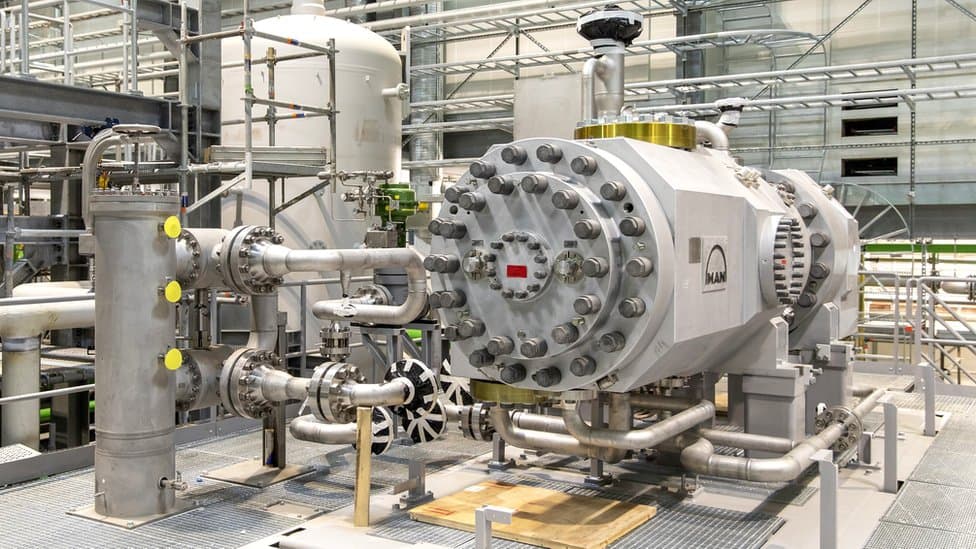
A national plan to scale heat pumps — 3× more efficient than conventional systems and capable of decarbonising 10–30% of India's emissions.
National Program on Dehydrators
Heat pump dehydrators against the ₹1 lakh crore of post-harvest waste — already piloting at 1 tonne/day in Ladakh, scaling to 8 strategic states.
Biomass Reservation for Hard-to-Abate Sectors
Redirecting 350M MT of wasted biomass into hard-to-abate sectors — steel, aviation, marine — where it is the only near-term substitute for coal.
Water Conservation Technologies
Mapping mature water conservation technologies (TRL 8+) — drip, decentralised STPs, ZLD — to the right sector problems, with a deployable policy ratchet.